Questions for Mohammad Yasin
1. Water companies still have the sole right to monitor their spillages. It is the equivalent of students marking their own homework. We know that Anglian Water misled the Environment Agency on the number of “Dry Day” spills. Why is this practice still allowed?
I completely understand the frustration and loss of public trust caused by a system where water companies are effectively allowed to self-report pollution incidents. For too long, regulation has relied heavily on company-led monitoring, while enforcement bodies such as the Environment Agency have been under-resourced and lacked the powers needed to independently verify what was happening on the ground.
The revelations around “Dry Day” spills have shown exactly why the current system is not good enough. Companies should not be in a position where they can mark their own homework without rigorous independent scrutiny.
That is why I welcome the Government’s proposed reforms to replace Ofwat with a stronger, integrated regulator with tougher enforcement powers, including no-notice inspections and stronger criminal sanctions. I also support giving the Environment Agency greater powers and resources so that independent monitoring becomes the norm rather than the exception.
I believe we need a system where monitoring data is independently verified, transparently published in real time wherever possible, and backed by meaningful penalties when companies mislead regulators or fail to comply.
2. Thames Water are looking for dispensation on spilling until its investment programme provides adequate facilities to deal with the issue. It is likely that this will not happen until 2030. Does that mean that it will be given special permission to carry on deliberately polluting until then – i.e. a further 4 years?
The reports regarding Thames Water seeking regulatory concessions are deeply concerning. No water company should be rewarded for failure, particularly after years of poor environmental performance, rising bills and inadequate infrastructure investment.
The public are rightly angry at the idea that companies could seek relief from penalties or weaker performance obligations while pollution continues.
My view is that any restructuring or rescue arrangement must be firmly tied to accountability, legally enforceable investment commitments, and clear environmental improvement targets. It cannot become a licence for continued pollution.
I have already signed the open letter coordinated by MPs calling on Ofwat and the Environment Secretary to reject any arrangement that effectively rewards failure or weakens environmental protections. More than 70 cross-party MPs are reported to have supported the letter.
I agree with campaigners who argue that allowing regulatory concessions of this nature could send the wrong signal across the entire water industry by suggesting companies can avoid accountability despite years of underinvestment and environmental damage.
There is also growing discussion around the possibility of Thames Water entering Special Administration if a suitable restructuring solution cannot be reached. I believe that approach could allow debt restructuring, stronger public accountability and a renewed focus on infrastructure investment and environmental responsibilities.
The Government has committed to halving sewage pollution by 2030 and strengthening enforcement through the Water (Special Measures) Act. Those commitments must apply consistently across the sector.
3. The Environment Agency (EA) have no authority to regularly monitor for E. coli on the River Great Ouse, due to the fact that there is not one official bathing site on the whole length of the river. The law should not need to align the need for a bathing site to give the EA powers to deal with the dangers of E. coli and its potential effect on human health. Why is the Environment Agency being handtied over such an important matter?
You raise a very important point. Public health protections should not depend solely on whether a stretch of river has formal bathing water designation.
At present, the legal framework gives the Environment Agency stronger duties and monitoring obligations where official bathing water status exists. That has created gaps in protection for rivers that are widely used by the public but do not meet the current designation criteria.
I agree that this needs to change. Rivers such as the Great Ouse are used by local communities for recreation, walking, paddling, rowing and informal swimming, and people deserve to know whether the water is safe.
I support expanding monitoring powers and increasing routine testing for pollutants such as E. coli beyond formally designated bathing sites. Greater transparency over water quality data is essential both for public health and for holding polluters accountable.
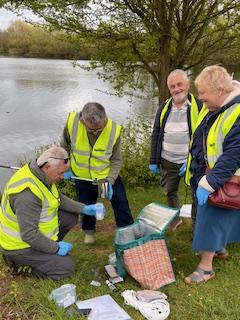
The work being carried out by GOVET and other citizen science groups is extremely valuable in helping identify issues locally, and I believe regulators should work far more closely with these organisations and take their findings seriously.
4. Nitrate levels at Grafham Water have increased dramatically over recent years and unless action is taken by Anglian Water to deal with the problem, our drinking water will be at risk within no more than 8 years. What action is planned?
The reports regarding rising nitrate levels at Grafham Water are concerning and underline the wider pressures facing our water infrastructure and environment. Protecting drinking water sources must be a top priority. Addressing nitrate pollution requires coordinated action involving water companies, regulators, local authorities and the agricultural sector.
The Government’s wider reforms are intended to strengthen long-term infrastructure planning and improve oversight of water quality, including through the creation of a stronger integrated regulator and enhanced infrastructure supervision.
I will continue to press Anglian Water and the Environment Agency for clarity on what mitigation and investment plans are being put in place specifically regarding Grafham Water, including:
• stronger catchment management;
• investment in treatment and storage infrastructure;
• action to reduce agricultural runoff;
• and regular transparent reporting to local communities.
It is essential that preventative action is taken now rather than waiting until water quality deteriorates further. Long-term resilience and public health must come before short-term financial considerations.
Additional Point on Flooding and River Infrastructure
Alongside the work needed on sewage and water quality, we also need sustained investment in flood resilience and river infrastructure.
I welcome the Government’s continued investment in flood prevention and climate resilience measures, including support for repairing and improving critical infrastructure such as sluice gates, embankments and flood defences. These upgrades are essential not only for protecting homes and farmland from flooding, but also for improving the long-term health and management of our river systems.
With climate change increasing the frequency of extreme weather events, it is vital that flood prevention and river management are treated as long-term national infrastructure priorities.
I will continue to support investment in local anti-flood measures and infrastructure improvements across Bedfordshire and along the River Great Ouse.
I want to pay tribute again to the work of Beds GOVET and local campaigners. Their independent testing, monitoring and advocacy have played a crucial role in highlighting issues that otherwise may not have received sufficient attention.
Public pressure has helped force water quality and sewage pollution onto the national agenda, and it is vital that local voices continue to shape the reforms that are now being discussed.
While the Government has begun introducing significant reforms, I recognise that public confidence in the water sector remains extremely low. Rebuilding that trust will require not only stronger regulation, but clear evidence that polluters are being held accountable and that rivers such as the Great Ouse are genuinely improving over time.
Current Government Policy
The Government has committed to major reform of the water sector through the Water (Special Measures) Act and the White Paper, “A New Vision for Water”. This includes:
• a target to halve sewage pollution by 2030;
• stronger criminal penalties for water company wrongdoing;
• powers to block unfair executive bonuses;
• replacing Ofwat with a stronger integrated regulator;
• no-notice inspections and enhanced infrastructure oversight;
• greater investment in water infrastructure and resilience;
• and reforms intended to stop water companies “marking their own homework”.
The Government has also announced significant investment in flood resilience and river infrastructure, recognising the growing risks posed by climate change and extreme weather events.
Additional Political and Public Context
I have consistently expressed concern about the condition of Britain’s waterways and the failures of the current regulatory system.
I have met with campaigners from The Sewage Campaign Network, including Feargal Sharkey, alongside representatives from the Environment Agency, to discuss sewage pollution, river health and public accountability.
The Channel 4 documentary Dirty Business further highlighted the scale of the environmental and public health issues surrounding sewage dumping and failures within the water industry. The programme reinforced growing public concern that water companies have too often prioritised financial returns over long-term infrastructure investment and environmental protection.
There is also increasing debate nationally regarding the long-term future ownership model of the water industry. While the Government is currently pursuing major regulatory reform and stronger enforcement, there remains a strong public and political case for bringing essential utilities back into public ownership over time so that they operate primarily in the public interest rather than for shareholder gain.
Suggested Next Steps
Given the seriousness of the concerns surrounding Grafham Water and the River Great Ouse, I would like to write formally to Anglian Water seeking and would appreciate input from BedsGovet.
• clarification on nitrate mitigation and long-term drinking water resilience plans;
• details of investment in sewage infrastructure and pollution reduction;
• information regarding monitoring and transparency arrangements;
• and updates on flood resilience, sluice gate repairs and river management works
I’m also happy to raise these matters directly with the Minister for Water and Flooding Emma Hardy MP.
Best wishes,
Mohammad Yasin
Member of Parliament for Bedford and Kempston
Email: office@mohammadyasin.org | Tel: 01234 346525